
Recent figures show that approximately 1,200 people sustain some form of paralysis each year in the UK due to spinal injuries.
At Emaari Legal, our solicitors have a proven track record of securing substantial compensation for clients with spinal cord and back injury claims. Contact one of our expert lawyers today to discuss your claim (nationwide service available).
Navigating Spinal Injury Claims
The spinal cord allows the brain to communicate with the body, while the spinal column protects the spinal cord and supports mobility. Injuries to the spine can therefore be life-changing.
Such injuries may result in long-term or permanent damage, potentially preventing a person from performing basic tasks at home, continuing employment, or—even in severe cases—living independently.
The profound impact on an individual’s capabilities can make this an extremely challenging period for both the injured person and their loved ones, both emotionally and financially.
Spinal Anatomy:
The spine functions as a critical conduit for neural signals between the brain and the rest of the body, while also providing structural support for movement and maintaining posture. Consequently, the spinal cord holds both anatomical and functional significance within the human body.
If you want, I can provide 3–5 more variations with slightly different professional tones suitable for medical, academic, or corporate contexts. Do you want me to do that?
The Spinal Cord
The spinal cord is a network of nerves through which the brain transmits signals to the rest of the body. It is safeguarded by the spinal column.
Enclosed within the spinal column and surrounded by a protective fluid known as cerebrospinal fluid (CSF), the spinal cord is composed of nerve fibres that form a vital component of the human central nervous system (CNS).
The spinal cord links the brainstem to the body, enabling the brain to regulate bodily functions and interpret sensory information transmitted back from the body.
The Spinal Column
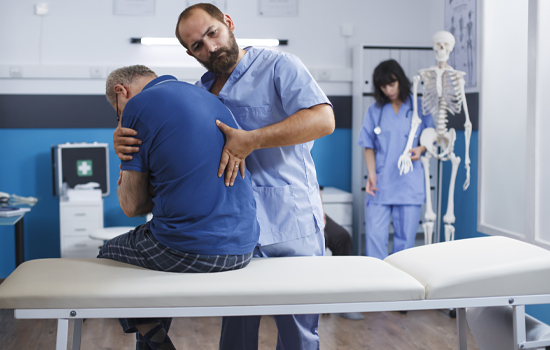
Individually termed a vertebra and collectively referred to as vertebrae, the spinal column is composed of 33 bony segments.
The vertebrae are interconnected by muscles and ligaments and separated by intervertebral discs of cartilage, which act as cushions to prevent friction or damage during movement.
Openings within the vertebrae form a canal through which nerves pass, enabling communication between the brain and much of the body down to the pelvic region. This system allows the brain to transmit signals that regulate sensation and movement.
Additionally, the spinal column provides a structural framework for the torso and upper body, ensuring both support and mobility.
The spinal column serves four principal functions:
- Safeguarding the spinal cord (primary protection)
- Shielding internal organs (secondary protection)
- Maintaining balance and ensuring even distribution of body weight to enable movement
- Supporting body mass and facilitating an upright posture
The spinal column is divided into five distinct regions: cervical, thoracic, lumbar, sacral, and coccygeal.
Cervical
Located at the top of the spine, the 7 cervical vertebrae grant the neck and head a wide range of motion.
Thoracic
Comprising 12 vertebrae, this region has limited mobility but provides structural stability by anchoring the ribcage.
Lumbar
The 5 lumbar vertebrae bear the majority of body weight. They are robust in structure but allow only moderate movement compared to the cervical region.
Sacrum
Formed by 5 fused vertebrae, the sacrum connects the spine to the pelvis, linking the spinal column with the hips.
Coccyx
Positioned at the base of the spine, the coccyx consists of 4 fused vertebrae that act as an attachment point for tendons, ligaments, and muscles in the pelvic region.
Categories of Spinal Injury
The spinal cord enables the brain to coordinate and regulate bodily functions, so damage to it may disrupt or completely sever communication between the two. Such injuries can lead to functional limitations and reduced mobility, and in severe cases, result in paralysis.
Spinal injuries are generally classified into two main categories: complete spinal injuries and incomplete spinal injuries, distinguished by the extent of their impact on the body.
Complete Spinal Injuries
Although relatively uncommon, this is the most serious form of spinal injury.
It involves damage across the entire width of the spinal cord, leading to a total loss of sensation, motor control, and function below the site of injury.
In general, the higher the level of spinal cord injury, the more extensive and severe the resulting paralysis.
Complete spinal injuries are further divided into two subtypes: complete tetraplegia and complete paraplegia.
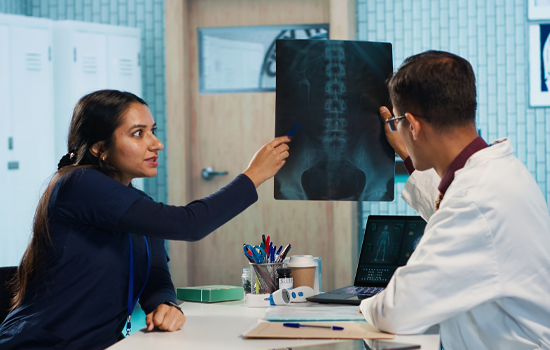
Complete Tetraplegia
This represents the most severe non-fatal spinal injury.
It occurs when the injury affects the cervical vertebrae in the neck, causing a complete loss of sensation, voluntary movement, and bodily function below the point of trauma.
Complete Paraplegia
This occurs when there is total damage to the spinal cord within the thoracic, lumbar, or sacral regions.
In these cases, the arms remain unaffected, but there is a loss of sensation, motor ability, and function below the chest.
Incomplete Spinal Injuries:
This type of injury is more frequent but generally less critical than complete spinal cord injuries.
Unlike complete injuries, it does not involve a full transection of the spinal cord, but it may still cause substantial damage, leading to partial loss of sensation, mobility, and function.
Incomplete spinal cord injuries are classified according to their location within the spinal column:
- Anterior Cord Syndrome – affecting the front portion of the spinal cord
- Central Cord Syndrome – involving the central region of the spinal cord
- Posterior Cord Syndrome – occurring in the back section of the spinal cord
- Brown-Sequard Syndrome – involving only one side of the spinal cord
- Cauda Equina Syndrome – impacting the nerve roots in the lower spinal column
Although the consequences of incomplete spinal cord injuries are typically less profound than those of complete injuries, they should not be regarded as minor, as they can still lead to life-changing complications.
Effects of Spinal Injuries
The spinal cord enables communication between the brain and the body, allowing essential functions such as movement, breathing, and digestion to take place.
When the spinal cord sustains an injury, the body’s ability to perform these functions may be compromised, resulting in serious impairments to sensation, mobility, and control in vital areas of the body.
Our solicitors have extensive experience in handling serious spinal injury claims, making them the ideal legal representatives to pursue compensation on your behalf. By securing financial support, they can help alleviate the burden you face, enabling you to focus on your recovery and plan for the future with greater stability. Without this essential assistance, the impact of a spinal injury can be devastating, affecting not only the injured individual but also their loved ones.
The extent and seriousness of the consequences of a spinal injury vary according to its classification, although nearly all result in disruption to sensation, motor ability, and overall function.
Complete Spinal Injuries
Complete Tetraplegia
Primary effects may include:
- Total paralysis of the body and limbs, or paralysis of the body and legs with some retained arm movement and the ability to move the head and neck
- Loss of bowel control
- Loss of bladder function
- Compromised breathing capacity, often requiring ventilatory support
- Inability to clear the airway effectively, leading to difficulty coughing
Secondary effects may include:
- Kidney calculi (kidney stones)
- Bone density loss (osteoporosis)
- Pressure ulcers (bedsores)
- Respiratory infections
- Deep vein thrombosis (DVT)
Complete Paraplegia
Primary effects may include:
- Complete loss of sensation and motor function in the legs and below the chest
- Loss of bowel control
- Loss of bladder function
- Reduced sitting balance due to weakened or impaired abdominal muscles
- Loss of reproductive/sexual function
Secondary effects may include:
- Persistent or chronic pain
- Bone fragility (osteoporosis)
- Pressure ulcers
- Pulmonary infections, such as pneumonia
- Deep vein thrombosis (DVT)
Incomplete Spinal Cord Injuries
Possible effects include:
- Sensation of vibration may remain
- Retained awareness of body position (proprioception)
- Diminished or absent pain sensation
- Reduced or absent temperature sensation
- Decreased muscle strength below the site of injury
Central Cord Syndrome
Possible effects include:
- Complete loss of arm function
- Complete loss of hand function
- Loss of control over bowel movements
- Loss of bladder regulation
- Partial weakness in the legs, sometimes with potential for recovery
Posterior Cord Syndrome
Possible effects include:
- Muscle strength remains intact
- Pain perception is preserved
- Temperature perception is preserved
- Loss of voluntary control in arms and legs
- Poor coordination and balance (ataxia)
Brown-Sequard Syndrome
Possible effects include (all occurring below the injury, in an uneven distribution):
- Total paralysis on one side of the body
- Preserved movement ability on the opposite side
- Pain sensation and temperature detection remain on the paralyzed side
- Loss of pain and temperature sensation on the side with intact movement
Cauda Equina Syndrome
Possible effects include:
- Intense pain in the lower back
- Partial paralysis and sensory loss
- Complete paralysis and sensory loss
- Bowel dysfunction (loss of control)
- Bladder dysfunction (incontinence or retention)
Treatment and Rehabilitation
Recent advances in both emergency care and long-term medical or surgical interventions for spinal injuries have steadily increased survival rates year after year.
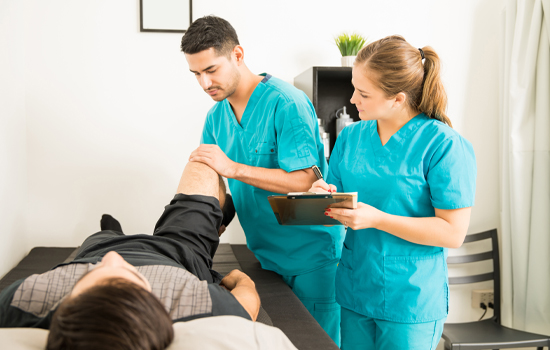
The purpose of treatment, rehabilitation, and therapy for individuals with spinal injuries is to enhance quality of life by promoting independence. Programs are designed to help patients maintain an active lifestyle, structure their daily routines effectively, and maximize progress during recovery.
Stages of Treatment and Rehabilitation
Acute Stage
Once the nature and extent of the injury have been identified, treatment and rehabilitation can begin immediately. This stage often involves stabilising or realigning the spine if displaced, along with providing support for essential functions such as breathing and nutrition when required. Care at this stage is typically delivered in a hospital’s intensive care unit.
In-Patient Stage
During the in-patient phase, which takes place either in a hospital or a specialised rehabilitation facility, the focus is on building strength, mobility, and practical functionality. Patients are guided through exercises and adaptive techniques to help them perform everyday activities in their changed circumstances, with the overarching goal of promoting greater independence.
Out-Patient Stage
In the out-patient stage, individuals live at home but continue rehabilitation through scheduled sessions either at home or in rehabilitation canters. These sessions are tailored to the individual’s needs and are adapted over time, based on progress made or new challenges encountered. The main objective is to further enhance independence and support long-term adjustment to daily living.
Types of Therapy
Physiotherapy
Physiotherapy is customised to the individual, depending on their remaining strength after the injury and the specific effects of the damage. Its goal is to strengthen key muscle groups and build endurance. This therapy can be demanding and sometimes discouraging, as it may involve pain and fatigue, particularly in the early stages. For this reason, encouragement and active involvement from family and friends are crucial, helping the injured person stay motivated and ultimately improving their long-term physical health.
Psychotherapy
One well-established form of psychotherapy is Cognitive Behavioural Therapy (CBT), which has proven highly effective. It is particularly helpful for individuals who are experiencing, or are at risk of developing, depression following their injury. CBT explores how a person’s thought patterns influence their behaviors, and how their behaviors in turn affect their thoughts. By addressing negative cycles and reinforcing positive thinking, CBT reduces stress and helps individuals focus on building a hopeful outlook toward the future.
Another approach, Rational Emotive Therapy (RET), has become increasingly common. RET addresses the unrealistic expectations people often impose on themselves or their lives. By challenging these irrational demands, the therapy reduces the stress and anxiety that arise when such expectations are unmet.
Occupational Therapy
Daily activities once taken for granted—such as bathing or dressing—can become challenging for those with severe spinal cord injuries. Occupational therapy focuses on maximising independence by teaching individuals how to adapt to their new capabilities. It equips them with strategies and tools to perform essential everyday tasks more effectively, enabling greater self-reliance in daily living.