
Amputation Injury Legal Advisors - Serious Injury Compensation Professionals
Every year, more than 5,000 people in the UK undergo major limb amputations, and many others experience severe injuries that can lead to partial or total limb loss. Such injuries can be profoundly life-changing, affecting a person’s ability to carry out everyday tasks, continue working, or maintain an independent lifestyle.
If your amputation was caused by another party’s negligence, our experienced serious injury solicitors, including specialist amputation injury solicitors, can guide you through the legal process, helping you pursue an amputation injury claim or secure limb loss compensation.
Amputations often carry lasting psychological and emotional effects, including grief, anxiety, and challenges adjusting to new limitations. At Emaari Legal, our dedicated team of serious amputation injury lawyers and amputation accident solicitors provides expert guidance, ensuring clients understand their rights and can pursue fair amputation compensation claims.
Contact us today for a free, no-obligation consultation, or complete our online claim form to begin your amputation claim with trusted legal experts.
Categories of Amputation
Traumatic Amputation
This form of amputation occurs when a body part is lost suddenly due to an unexpected, forceful accident.
Traumatic amputations can become life-threatening if there is severe blood loss, as the body may enter circulatory shock.
Surgical Amputation
A surgical amputation is typically performed when blood flow to a limb has been severely reduced or completely obstructed, leading to tissue death (necrosis).
Surgery may also be required after a major injury where the limb is too badly damaged to be reconstructed or salvaged.
Patients may undergo multiple surgical procedures and follow-up treatments to stabilize the wound. In most cases, surgeons aim to preserve as much of the limb as possible to maintain partial functionality and mobility.
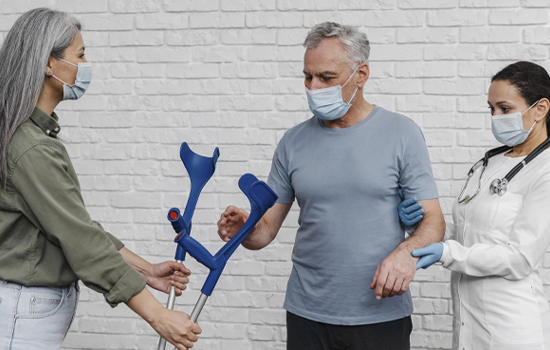
Examples of Surgical Amputation include:
- Digit amputation – removal of one or more fingers or the thumb at any joint level.
- Transracial amputation – surgical removal of the forearm beneath the elbow
- Shoulder disarticulation – removal of the entire arm at the shoulder joint.
- Ankle disarticulation – removal of the foot at the ankle joint.
- Knee disarticulation – removal of the leg at the knee joint.
- Transfemoral amputation – removal of the thigh above the knee but below the hip joint.
How Amputation Claims Are Calculated
The compensation awarded to an individual following an amputation considers several factors, including:
- Pain, suffering, and loss of enjoyment of life – often referred to as general damages.
- Expenses for prosthetic devices – costs associated with artificial limbs or related equipment.
- Support and caregiving needs – any assistance required for daily living or personal care.
- Medical and healthcare costs – including hospital treatment, therapy, and ongoing medical care.
- Home and vehicle modifications – adaptations needed to maintain independence, such as ramps or specially fitted vehicles.
Loss of income – covering both earnings lost in the past and anticipated future loss of earning capacity.
Does the Timing of the Amputation Matter?
Yes, the timing is important. There is a three-year limitation period for making a claim, which begins from the date of the accident or incident that caused the amputation.
In certain situations, this time limit may differ:
- Children: A personal injury claim can be filed within three years of the child’s 18th birthday.
- Individuals lacking mental capacity: A family member or legal guardian may act on their behalf to initiate the claim.
You should consult a legal professional as soon as possible to ensure that all deadlines are met and no issues arise regarding the time frame for pursuing a claim.
Does it make a difference who was at fault?
Yes. We will need to prove that the amputation was the result of another party’s negligence or wrongdoing.
Causes of Amputations
Amputations can result from severe physical injuries sustained in accidents, or from infections and medical conditions that arise due to a healthcare professional’s negligence in diagnosis or treatment.
Physically Traumatic Injuries
A traumatic amputation can result from sudden, violent incidents, which may fall into one of the following categories:
- Chemical: caused by exposure to corrosive substances
- Mechanical: caused by machinery malfunction or improper use of equipment
- Thermal: caused by extreme heat or fire
- Electrical: caused by high-voltage electric shock
Common scenarios leading to traumatic amputations include:
- Workplace accidents
- Pedestrian accidents
- Car collisions
- Motorcycle accidents
Medical Negligence
Certain serious medical conditions, such as meningitis, can unfortunately lead to amputations. Many illnesses, infections, or complications—sometimes arising despite proper care—can cause life-changing injuries like amputations.
When a medical professional misdiagnoses or mistreats a condition, resulting in the need for amputation, the consequences can be devastating. Beyond the physical impact, patients often feel a deep sense of betrayal and loss of trust in the healthcare system.

Conditions that may lead to amputations due to medical negligence include:
- Cancer
- Diabetes
- Osteomyelitis
Sometimes, hospital-acquired infections caused by inadequate hygiene can necessitate amputation. Examples include:
- Meningitis
- MRSA (Methicillin-resistant Staphylococcus aureus)
- Staphylococcus aureus
Impact of Amputations
Limbs and smaller extremities, such as fingers, hands, toes, and feet, play a vital role in enabling movement and overall mobility.
The loss of a limb can significantly affect a person’s ability to perform everyday tasks, reducing independence and limiting functional capability.
Additionally, undergoing an amputation can be deeply distressing, not only for the individual but also for their family, often leading to emotional and psychological challenges.
Our specialist solicitors have extensive experience handling amputation claims, making them well-equipped to advocate on your behalf. By securing compensation, we can help ease some of the burdens you face, allowing you to focus on recovery and planning for the future. Without expert support, the consequences of an amputation can profoundly impact all aspects of a person’s life, as well as the well-being of those closest to them.
Physical Effects
Infection
While all surgical procedures carry some risk of infection, amputations have a higher likelihood due to their classification as ‘major’ surgery, often requiring large incisions. Infection can occur if strict hygiene standards in the operating theatre are not maintained.
Post-surgery, the residual limb (stump) is frequently used for support, increasing the chance of irritation or exposure to harmful bacteria. Infections at the amputation site can necessitate additional treatments, further surgeries, or in some cases, more extensive amputation.
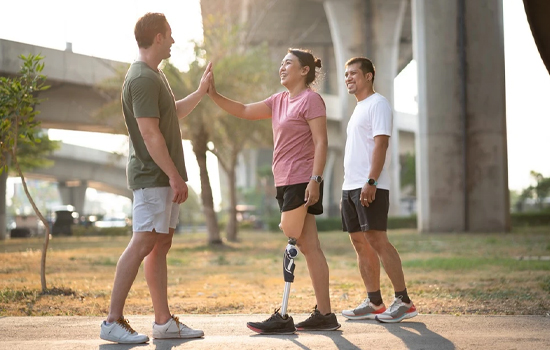
Restricted Mobility
Arm amputations affect balance because the upper body’s weight distribution changes, making walking and general movement more challenging. Individuals who have lost one or both hands or arms may struggle with everyday tasks such as eating, dressing, or handling objects, and must adapt to their altered capabilities.
Leg amputations typically prevent walking without the aid of a prosthetic limb or mobility aids such as crutches. Some individuals cannot, or choose not to, use prosthetics due to adaptation challenges, physical limitations, age, or strength, and may rely on a wheelchair to maintain mobility.
Stump Pain and Phantom Limb Pain
Stump Pain occurs when nerves at the site of the amputation become damaged, sending pain signals to the brain, which are interpreted as discomfort in the residual limb.
Phantom Limb Pain refers to the sensation of pain in a limb that has been amputated. Even though the limb is no longer present, the brain continues to perceive pain, which can range from brief discomfort to severe, constant agony.
Fatigue
Amputees often experience significant fatigue, particularly in muscles that must compensate for the loss of a limb during daily activities.
This is especially prevalent in lower-limb amputees using prosthetics for walking or sports, and in upper-limb amputees performing tasks that previously required both hands. Activities once considered simple can become labour-intensive and exhausting, requiring extra effort and energy.
Psychological Effects
Post-Traumatic Stress Disorder (PTSD)
Amputees who experience traumatic and painful incidents are at an increased risk of developing PTSD, particularly if they find it difficult to move past or forget the distressing memories of their injury.
Those undergoing planned surgical amputations are less commonly affected by PTSD, as they have time to mentally prepare, and the procedure is conducted under anaesthesia and with effective pain management.
Individuals suffering from PTSD may exhibit symptoms such as depression, irritability, insomnia, nightmares, and flashbacks to the traumatic event. For a more detailed discussion, please refer to our pages on Serious Psychiatric Injuries.
Treatment and Rehabilitation
Advances in amputation surgery, prosthetic technology, physical rehabilitation, and psychological therapy have significantly improved outcomes for amputees. With proper support and effort, individuals can work toward regaining independence and enhancing their quality of life.
Treatment and rehabilitation programs aim to maximise independence through effective use of prosthetics or mobility aids, teach strategies for living independently with an amputation, and encourage structured daily activity to maintain physical and social engagement.
Stages of Rehabilitation
In the Hospital
The duration of a hospital stay varies depending on the amputee’s overall physical and psychological condition.
Healthcare professionals closely monitor the patient to ensure the surgical site is healing properly and to prevent complications. Antibiotics are often administered to reduce the risk of infection.
As an Inpatient
Once an amputee has achieved a sufficient initial recovery, a personalised rehabilitation program begins. This program addresses both the physical and emotional impacts of amputation.
Rehabilitation focuses on rebuilding muscle strength, redeveloping dexterity, adapting daily skills to the new circumstances, and implementing strategies to support mental health and wellbeing.
At Home
After the critical stages of recovery, when an amputee returns home, ongoing care and rehabilitation remain essential.
It is important to maintain proper hygiene and protect the residual limb to prevent infection. A structured exercise regimen supports the gradual improvement of strength, coordination, and functional ability, helping the individual regain independence and carry out daily tasks confidently.
Types of Therapy
Psychotherapy
One form of psychotherapy, Cognitive Behavioural Therapy (CBT), is highly effective. It primarily supports individuals experiencing or at risk of depression following their injuries. CBT focuses on understanding how a person’s thought patterns influence their behaviours, and how these behaviours, in turn, affect their thoughts. By addressing negative thinking patterns and reinforcing positive ones, this therapy can reduce stress and help the individual adopt a more optimistic outlook on the future.
Depression in the injured person—or even among family members—can impede physical recovery, particularly if the amputee experiences PTSD. Various psychotherapeutic approaches aim to tackle or prevent such emotional and psychological challenges.
Occupational Therapy
Everyday activities that were once simple, such as bathing or dressing, may become difficult following a significant amputation. Occupational therapy seeks to enhance a person’s independence by helping them adapt to their new abilities and regain the skills necessary for daily living.
Physiotherapy
Physical therapy is customized based on an individual’s existing strength and the nature of their injury. Its goals include improving an amputee’s strength, coordination, mobility, and endurance, as well as teaching effective use of prosthetics or wheelchairs.
Physiotherapy can be physically demanding and sometimes painful, especially in the early stages. Family and friends play a crucial role in providing encouragement, support, and participation, which can significantly aid in the individual’s long-term physical recovery.